

As an Amazon Associate I earn from qualifying purchases. Some links in this post are affiliate links, which means DezineAura may earn a commission at no extra cost to you.
This holiday hosting checklist helps you prepare for Thanksgiving, Christmas, or a smaller seasonal gathering without leaving every job until the last hour. Start with the people, menu, and space you have, then work backward from the time guests will arrive.
A useful plan answers practical questions: where will coats go, which dishes need the oven at the same time, where can guests help themselves to water, and what will happen to leftovers? Use the timeline below as a guide and skip anything your gathering does not need.
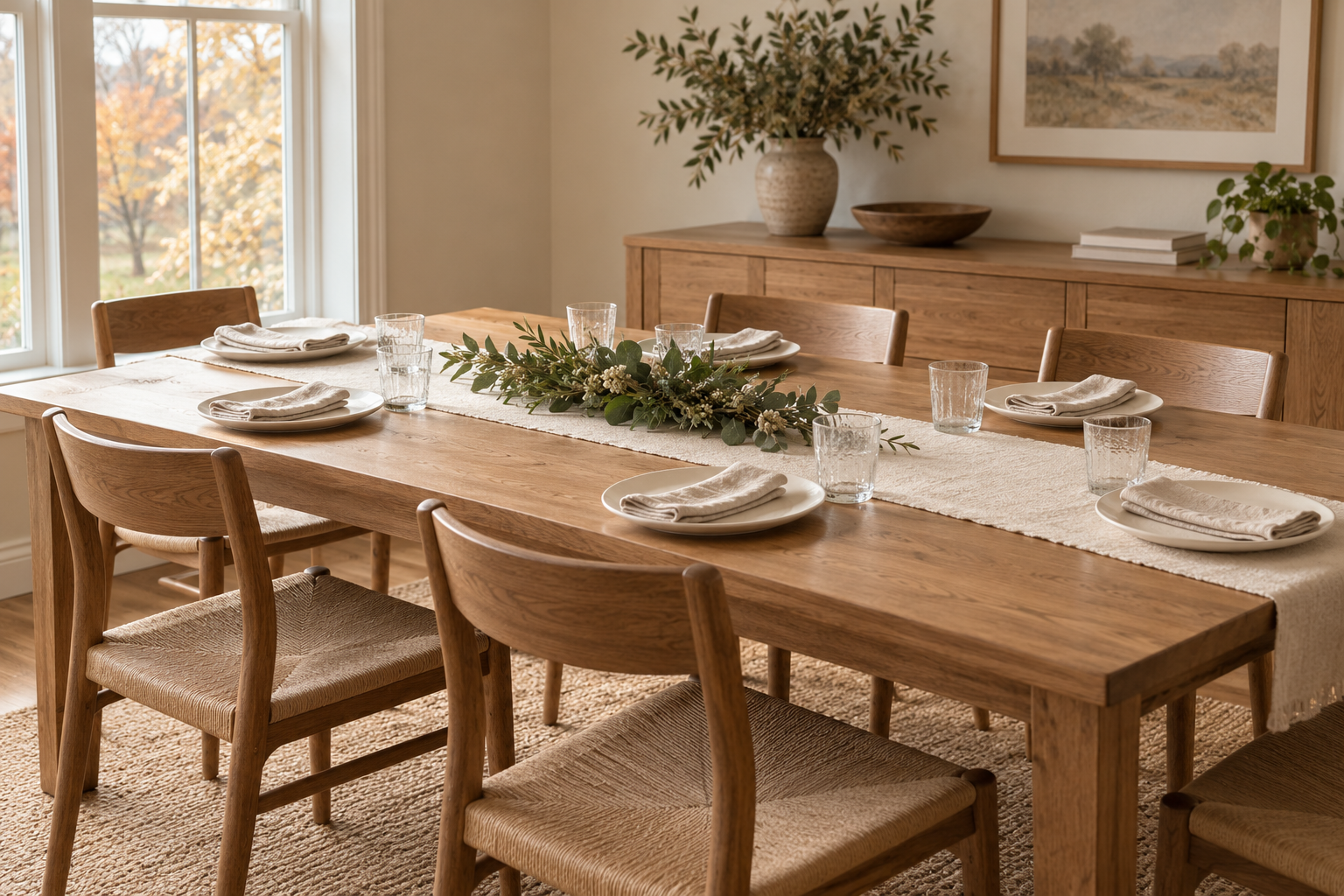
One to two weeks before: confirm guests and the menu
Confirm the headcount, arrival time, and whether anyone is staying overnight. Ask directly about food allergies, dietary needs, and access needs. A clear answer is more helpful than guessing based on a previous visit.
Build the menu around your oven, refrigerator, and available time. Write the cooking temperature and time beside each dish. If several dishes need the oven at different temperatures at the same moment, simplify before shopping. Choose something that can be made ahead, bought ready to serve, or brought by a willing guest.
Your planning checklist:
- Confirm the guest count and meal time
- Agree on any dishes guests are bringing
- Count usable chairs, glasses, plates, and cutlery
- Assign a serving dish and utensil to each menu item
- Check refrigerator space and write a cooking schedule
- Combine ingredients into one shopping list after checking the pantry
Three days before: plan a table that still has room for dinner
Set the table once with the empty serving dishes you expect to use. This catches the platter that is too wide and the missing serving spoon before the day becomes busy. If food will be served family-style, the room left for dishes matters more than the size of the centerpiece.
Use a low arrangement, everyday plates, and folded napkins. Repeat one or two colors to connect pieces you already own. A narrow runner is easier to fit around serving dishes than a large centerpiece. For buffet service, keep the eating table clear and test the serving surface separately.
Useful items to consider:
- A washable runner sized for your table
- Reusable napkins that coordinate with existing dishes
- Extra place settings only if your current set falls short
- A small low centerpiece that can be moved easily
The day before: create a self-serve drinks station
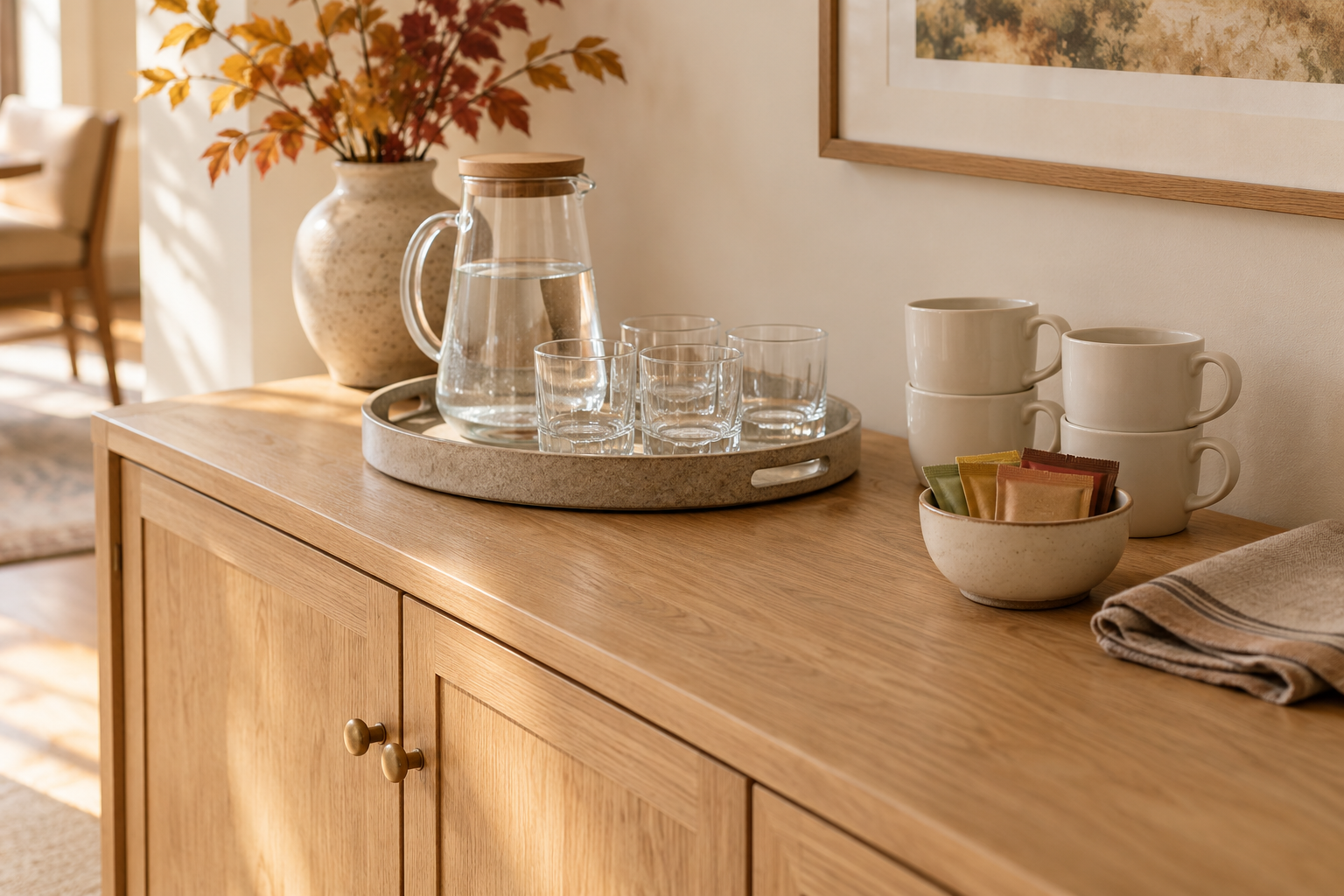
Put water, glasses, mugs, and suitable drinks on a stable surface away from the stove and food-preparation area. Leave a clear spot where a guest can set down a glass. Keep refills and a cloth nearby so a small spill does not interrupt cooking.
For hot drinks, use an appropriate appliance or vessel and follow its instructions. Keep cords clear of walkways and places where children can pull them. Leave ingredient labels available when guests need to distinguish drink options, and include an easy nonalcoholic choice.
Useful items to consider:
- A stable serving tray with room for glasses
- A covered water pitcher or carafe
- Enough mugs for the guests having hot drinks
- A small bowl for packaged tea, with labels available
- A clean cloth for small spills
The day before: check serving and leftover-storage essentials
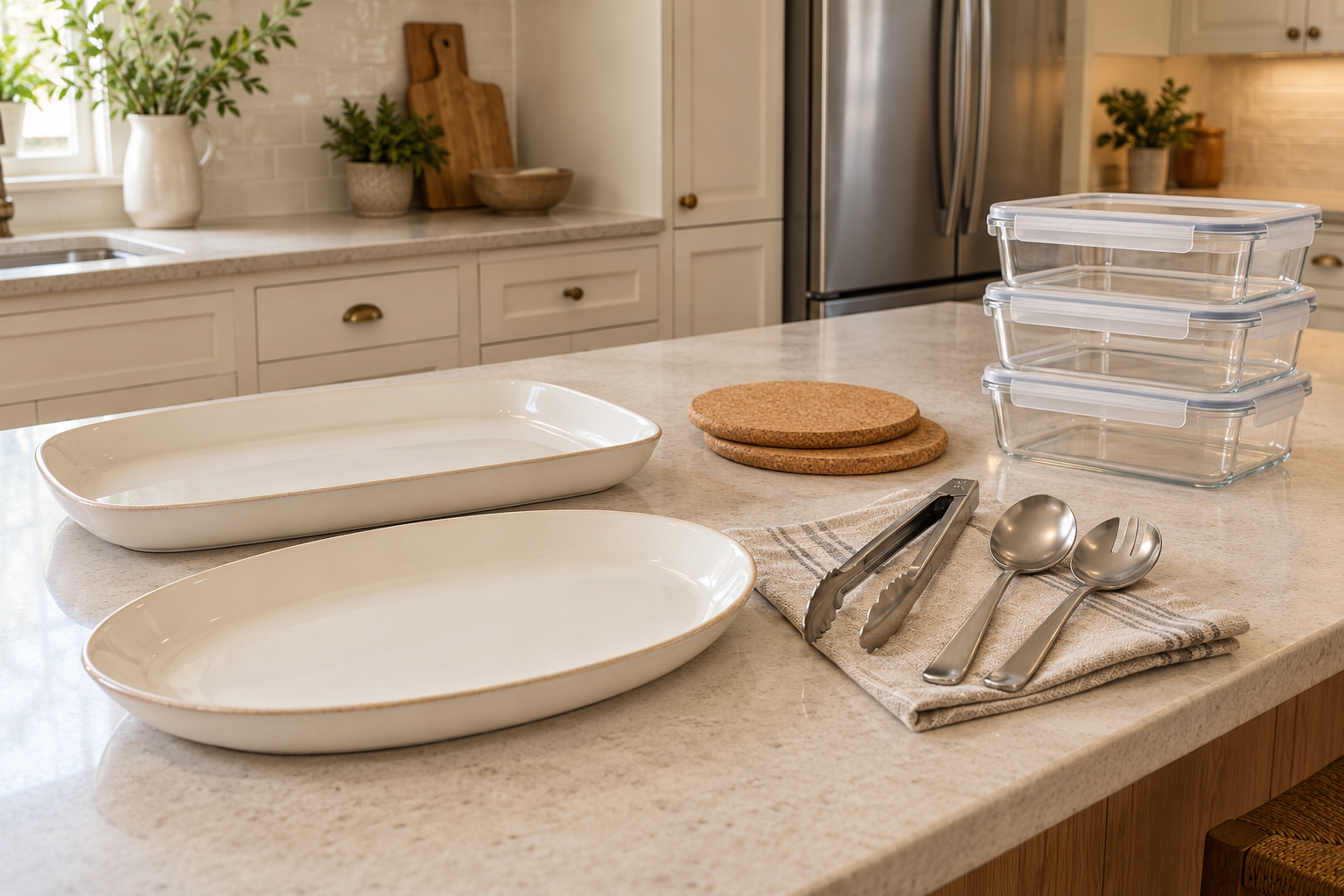
Place a small note in each serving dish naming its food, then put the matching spoon or tongs beside it. Borrow occasional-use items before buying more things to store all year. When you need a new piece, check its dimensions, material, cleaning instructions, and intended use. A decorative tray is not automatically oven-safe or suitable for direct food contact.
Set aside clean storage containers with matching lids before dinner. Shallow containers are useful for dividing leftovers into smaller portions, while labels help identify foods and dates. Clear space in the refrigerator first so a good storage plan is possible when the meal ends.
Useful items to consider:
- Serving platters sized for the dishes on your menu
- Serving spoons or tongs appropriate for those foods
- Heat-resistant trivets used according to their instructions
- Shallow food-storage containers with matching lids
- Labels or masking tape and a pen
For perishable leftovers, the USDA recommends refrigerating within two hours, or one hour when temperatures are above 90°F. Divide food into shallow containers for cooling and keep the refrigerator at 40°F or below. Follow the USDA guidance on handling leftovers. Set a reminder during the gathering instead of waiting until every guest has left.
The day before: reset the areas guests will use
Focus on the entrance, bathroom, seating, and eating space. Clear a coat spot, refill hand soap, put out a clean hand towel, and make spare toilet paper easy to find. Move bags, boxes, and decorations away from the walking route.
If guests are staying overnight, clear a luggage spot and provide fresh linens, a reachable light, and a place for clothing. Our holiday guest room basket guide includes practical ideas for helping visitors settle in. You do not need a room makeover to make a stay comfortable.
If you have pets, decide where their supplies and resting spot will go during the gathering. Tell guests any household rules about doors and feeding. The pet organization guide can help you make everyday supplies easier to find before visitors arrive.
On the morning: make cleanup easier before cooking gets busy
Empty the dishwasher, clear part of the sink, and put clean towels where you can reach them. Decide where rubbish and recycling will go, and replace full bags before guests arrive. Keep one part of the counter available for finished dishes or storage containers.
Review the cooking schedule and identify any task a willing helper can handle. Asking someone to refill water or welcome arrivals is clearer than saying you need help with everything. Leave a short break in your own schedule to change clothes and get ready.
The final 30-minute holiday hosting checklist
- Check the cooking schedule and finish time-sensitive tasks
- Fill the water pitcher and set out glasses
- Put the correct serving utensils beside each dish
- Check the bathroom and clear the coat spot
- Move bags, packaging, and trip hazards out of the route
- Assign drinks or welcoming duties to a willing helper
- Set a reminder to refrigerate perishable leftovers on time
- Leave a few minutes to get yourself ready
What should you buy for holiday hosting?
Buy for the gaps in your actual plan. Count dishes, chairs, utensils, and storage containers first. An extra serving spoon or a few shallow containers may be more useful than another decorative purchase. The shopping buttons open Amazon search results for the types of items discussed, so compare dimensions, materials, and current details before choosing.
How do you host a holiday meal in a small home?
Keep drinks outside the cooking zone, use a separate surface for serving when needed, and choose decorations that leave functional space clear. A smaller menu and a clear cooking schedule reduce pressure on both the kitchen and the host. Borrow chairs or serving pieces for a single gathering when that is practical.
Can the same checklist work for Thanksgiving and Christmas?
Yes. Guest planning, the cooking schedule, serving, cleanup, and leftover storage work much the same way. Change the menu and seasonal details while keeping the practical setup. If your Christmas gathering includes gifts, set aside one place for them so bags and wrapping do not take over the dining area.
Keep this holiday hosting checklist with your menu. After the gathering, add one note about what worked and one thing you would change. That gives you a useful starting point for your next celebration.