

As an Amazon Associate I earn from qualifying purchases. Some links in this post are affiliate links, which means DezineAura may earn a commission at no extra cost to you.
Pet supplies tend to spread into the places you use most: a leash beside the front door, toys under the sofa, and a food bag competing for kitchen space. A few convenient storage spots can make everyday routines easier without turning your living room into a supply cupboard.
These pet organization ideas for small spaces separate supplies into four jobs: walking, feeding, playing, and cleaning. Start with the area that causes the most daily frustration. You may already own the basket, tray, or drawer divider you need.
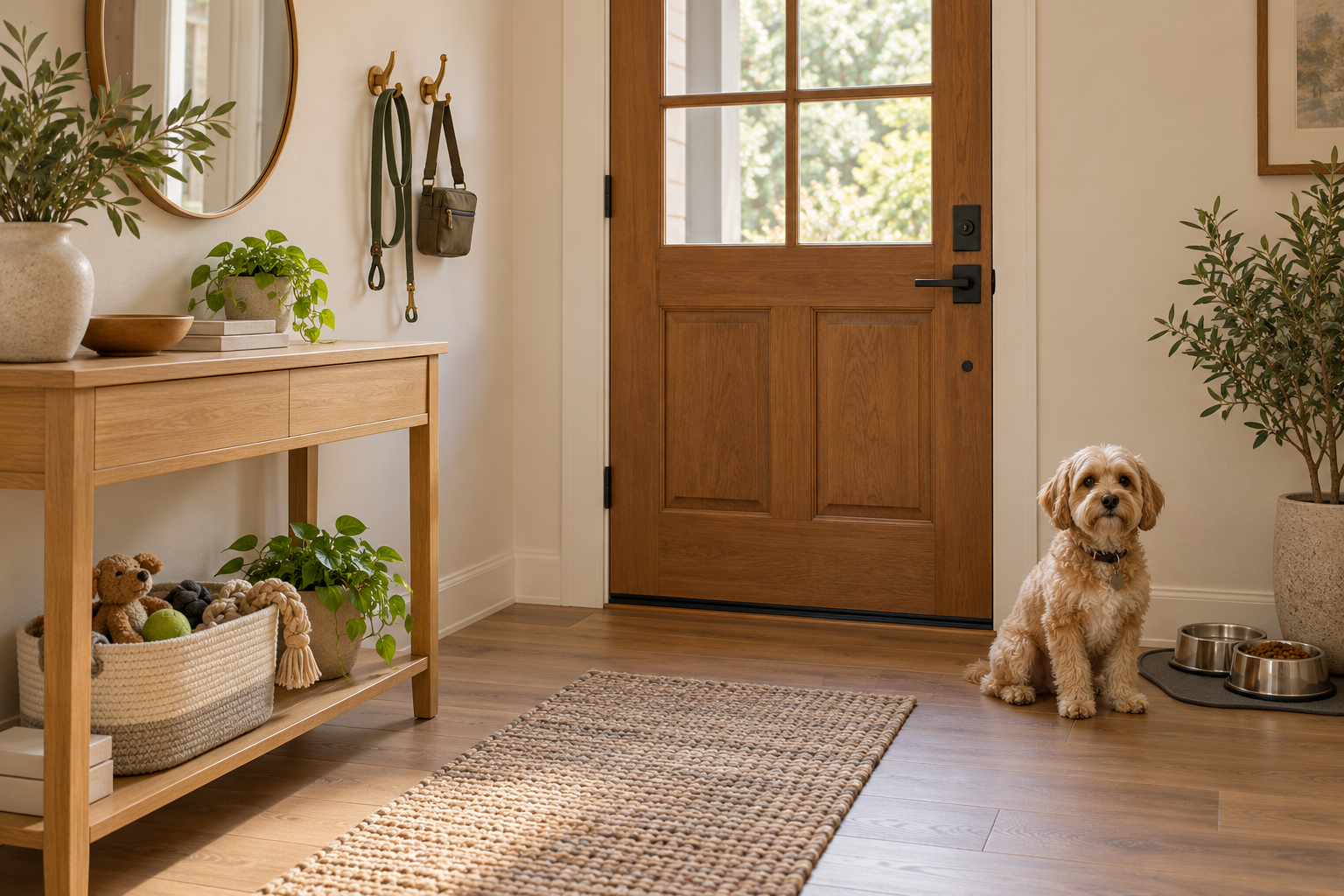
1. Make a dog-walking station beside the exit
Place walking supplies near the door you actually use. One hook for the leash and a small pouch for waste bags are often enough. If several people walk the dog, agree on one return spot so the leash is not moving between rooms.
Before buying wall storage, check the fixing method, weight limit, and required surface. Keep hanging straps out of reach of pets that chew, and leave the door swing and walkway clear. In a rental, an existing coat hook or a nearby drawer may be simpler than adding hardware.
Useful items for this setup:
- A securely mounted leash hook or compact hook rail
- A washable walking pouch for waste bags
- A small tray for keys and everyday accessories, placed out of reach
2. Choose dog toy storage your pet can use
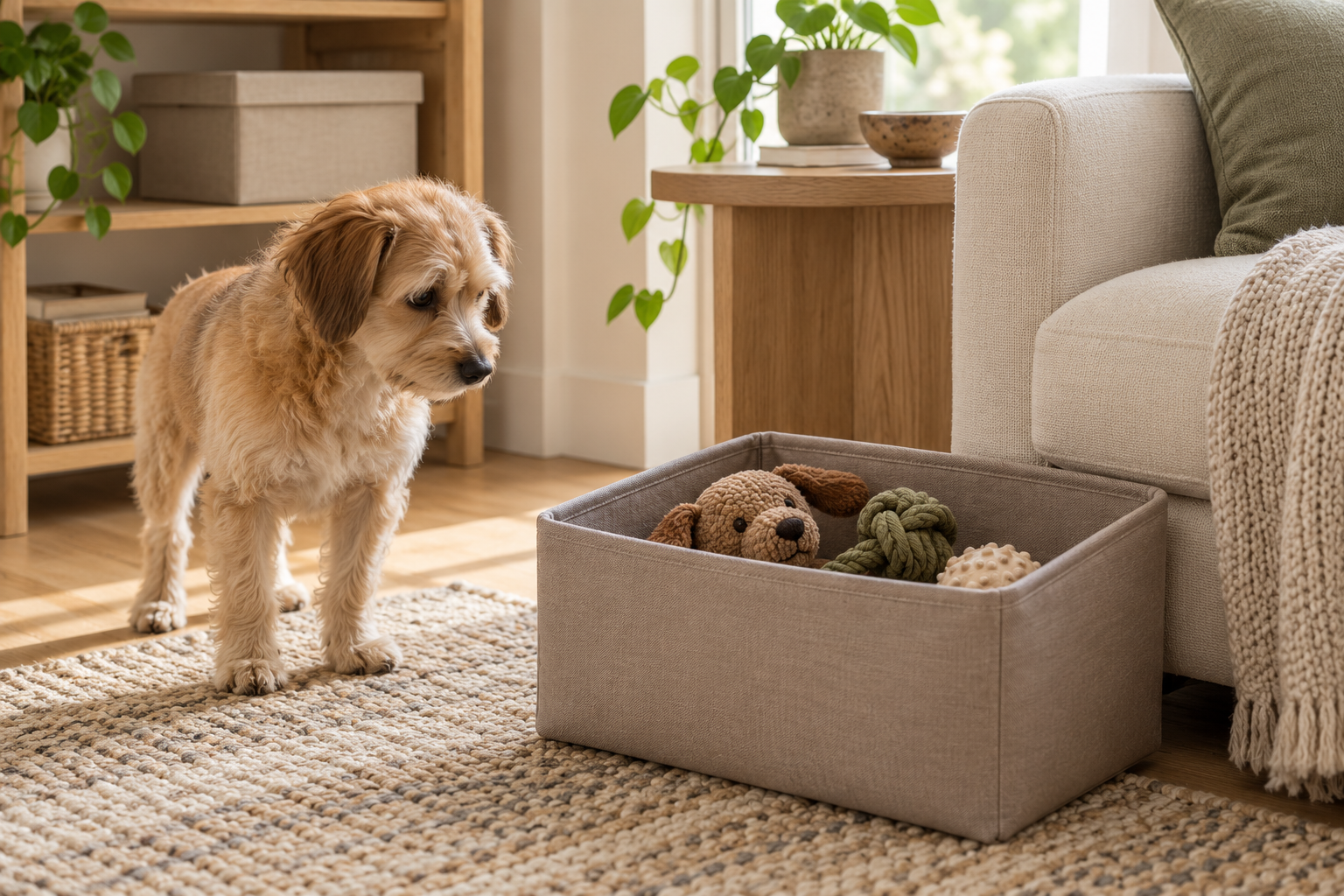
A deep basket may look tidy while hiding every favorite toy at the bottom. For a small dog, a low open container can be easier to reach. For a larger dog, a sturdy bin with a smooth edge may make more sense. Choose the container around the pet and the room you have.
Keep a manageable selection of suitable toys in the main bin. Store the rest separately and rotate them when useful. Remove damaged toys during your reset. If your pet chews baskets, fabric handles, or loose fibers, choose a more suitable container. Treat the image as styling inspiration; plants and decorative objects should also be selected and positioned with your pet in mind.
Useful items for this setup:
- A low toy bin with washable surfaces or a removable liner
- A separate closed box for spare toys
- A small washable mat if the floor needs protection
3. Store pet food with its original packaging
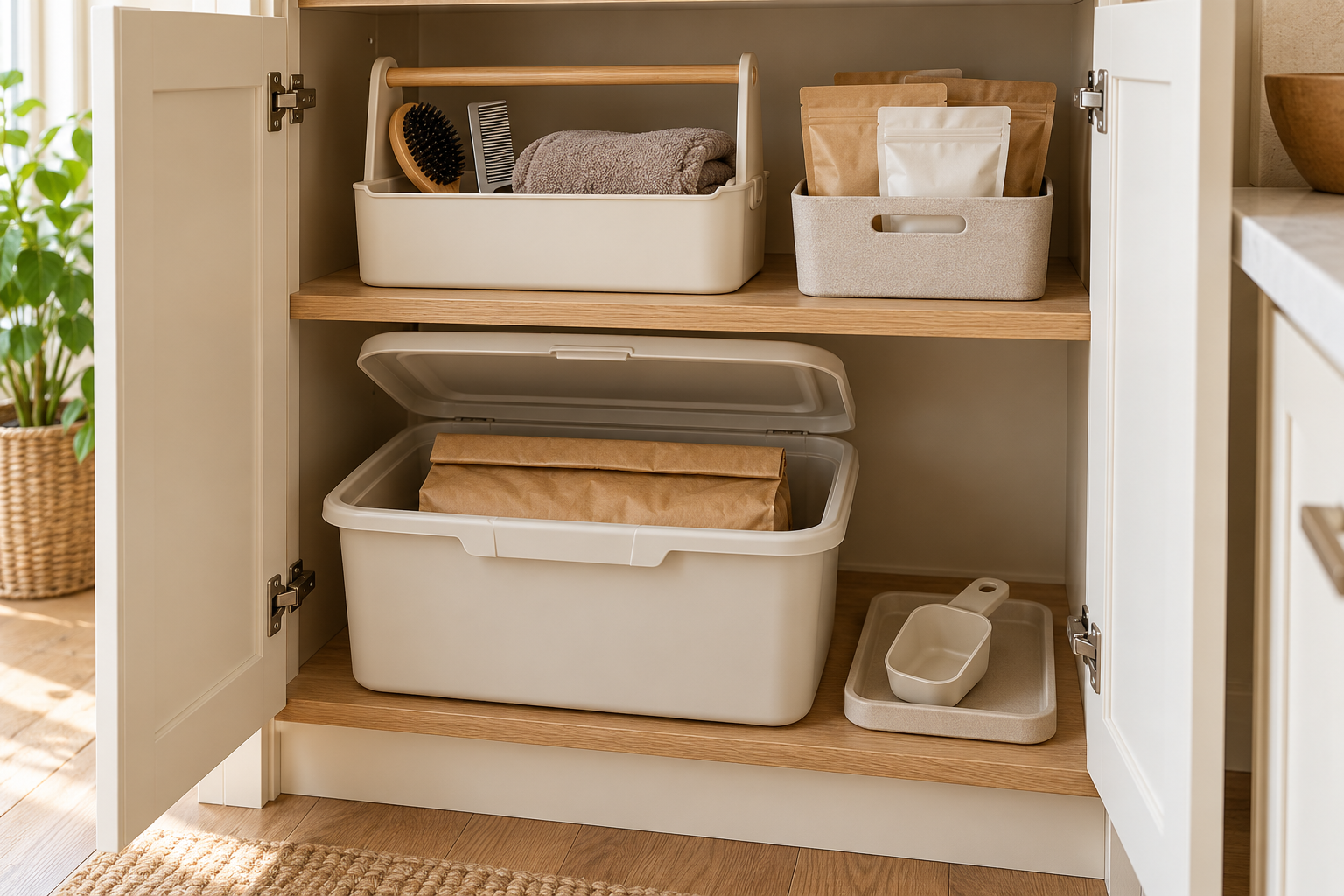
Measure the food bag and the proposed storage space before choosing a container. A bin that fits in a cupboard is still frustrating if the lid cannot open or the whole bag will not fit inside. Leave enough space to lift the bag out for cleaning and refilling.
The FDA recommends keeping pet food and treats in their original packaging. If you use another container for dry food, put the entire bag inside instead of pouring kibble directly into the bin. Keep identifying information with the food and follow the packaging instructions. Read the FDA pet food storage guidance for more detail.
Useful items for this setup:
- A lidded storage container large enough to hold the original food bag
- A dedicated scoop stored clean and dry
- A small bin for unopened treats, with packages left intact
4. Give grooming supplies one portable home
Put the tools you use together into a washable caddy: brush, comb, pet towel, and grooming products already appropriate for your pet. A handle makes it easy to carry the kit to the place where grooming happens, then return it afterward.
Store products in their labeled packaging. Keep tools, medicines, and cleaning products inaccessible to pets and children. An open decorative basket is not a substitute for secure storage when the contents need it.
Useful items for this setup:
- A washable handled caddy
- A dedicated towel and grooming brush
- A suitable secure cupboard or shelf for the kit
5. Define a feeding area with room to clean
A feeding mat gives bowls a clear home and makes small spills easier to manage. Check its dimensions against the bowls and available floor space. Leave enough room to lift the bowls and clean underneath them; avoid squeezing the setup into a doorway simply to hide it.
Choose washable bowls appropriate for your pet and clean the area regularly. A simple setup that is easy to maintain is more useful than several accessories that make cleaning difficult.
Useful items for this setup:
- Washable bowls appropriate for your pet
- A wipe-clean feeding mat that lies flat
- A designated cloth for the surrounding floor, stored separately from food tools
6. Use one drawer for easily lost pet accessories
A divided drawer can hold spare collars, unopened waste bags, and small accessories. Group by use so you can see what you own before buying duplicates. Keep records in a labeled folder or digital file rather than mixing them with everyday supplies.
For multiple pets, separate items that must not be confused. A simple name label is more useful than matching boxes that hide their contents. Put daily supplies in the easiest-to-reach section and keep backups farther back.
7. Finish with a five-minute weekly reset
- Return leashes and walking pouches to their usual spot
- Collect toys and remove damaged ones
- Clean storage surfaces as needed and let them dry
- Check food and treat packaging before restocking
- Refill the walking pouch and wash pet towels
Do this before writing a new shopping list. The most useful pet supply storage system is one everyone in the household can maintain without extra instructions.
Where should pet supplies go in a small apartment?
Keep frequently used supplies near the task: walking items by the exit, food in a suitable storage area, and toys near the main play space. Use a spare shelf or drawer for backups. You do not need every category in the same place.
How do you hide dog toys without making them hard to reach?
Use a low container that coordinates with the room, with a small selection of toys inside. Choose materials your pet will not chew and keep the bin easy to reach. Convenient storage is more likely to stay tidy than a closed box you must open every time.
What should you buy first for pet organization?
Start with the problem you notice every day. That might mean one leash hook, a suitable toy bin, or a place for the food bag. Measure first and reuse containers you already own when appropriate. The shopping buttons open Amazon search results for the types of supplies discussed, so compare sizes, materials, and current product details before choosing.
For another practical way to organize household essentials, explore our holiday guest room basket guide. Both projects work best when useful items have clear, convenient homes.